
 80813-00200


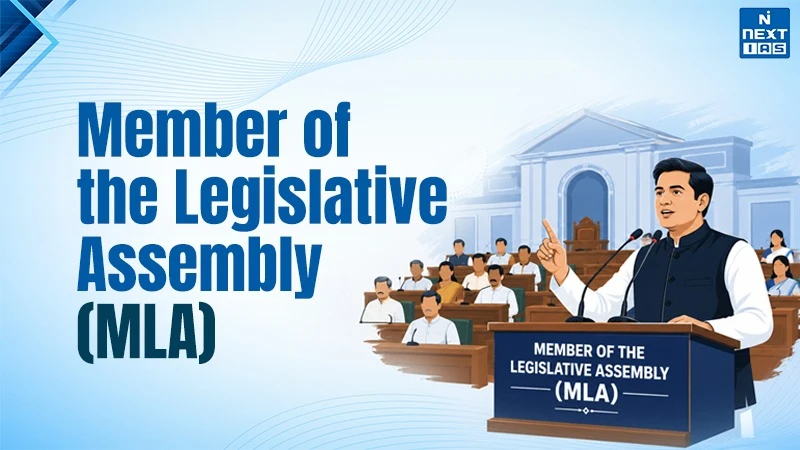
The full form of MLA is member of the legislative assembly, which is a representative of the constituent assembly in a state. It is directly elected by the voters of that assembly. An MLA has a very important role in policy creation and formation. Their duties include dealing with the issues faced by people, and making sure that the policies of the government work in favor of the constituencies. He raises the problems of the locality, introduces new laws, takes part in debates, and also monitors the development projects.
They have total freedom of speech in the Assembly hall and cannot be taken to court for any speech made in the course of a session. An MLA can become a state minister or chief minister. In case a non-MLA becomes minister, then within 6 months, he or she should become an MLA. Together with MPs, they are a part of the electoral college that elects the President of India.
Roles and Responsibilities of an Member of the Legislative Assembly
A Member of the Legislative Assembly (MLA) is crucial in acting as a representative of the common man in his constituency. He listens to the problems of the people, raises pertinent issues in the Legislative Assembly, and strives to find solutions to these issues. MLAs take part in the process of formulation, discussion, and passing of state legislation related to the fields of education, healthcare, agriculture, infrastructure, and other social welfare activities.
Moreover, MLAs play a part in the approval of the state budget so that the government money can be spent wisely for the development of the country. Another important task of the MLA is the scrutiny of the execution of government policies and welfare schemes. MLAs promote development activities in the form of roads, schools, hospitals, and sanitary facilities in the locality.
MLA Powers, Eligibility, Election Process, Qualifications and Disqualifications
There are several significant powers that the MLAs possess in order to ensure proper state governance. These powers include legislative powers, which give MLAs the opportunity to formulate, debate, and vote on state laws. They also have financial powers due to the discussion and approval of the state budget and expenditures.
Executive oversight is another power that is exercised by MLAs when questioning ministers, assessing policies, and holding the state government responsible for its actions. Most MLAs sit on legislative committees, whereby they assess proposed bills, discuss public matters, and suggest changes. MLAs also engage in policymaking and voting on state legislation.
In order to be an MLA, one should be an Indian citizen of not less than 25 years of age, a registered voter, and satisfy the qualifications laid down under the constitution and other related laws. No specific educational qualification is necessary for becoming an MLA.
The MLAs are directly elected by the people from their constituencies through the Electoral Commission of India. The candidate who gets the majority of the total votes cast is declared an MLA.
It may result in the disqualification of the person as an MLA if the person has an office of profit, or the person is certified to be of unsound mind by a competent court, or the person is an undischarged insolvent, or he/she is disqualified under the Representation of the People Act, 1951.
MLA Salary and Perks
The salary and perks of an MLA may vary from one state to another. Apart from receiving a monthly salary, MLAs enjoy allowances on travel, accommodation, communication, and other expenses. The MLAs receive office facilities, support from the staff, travel perks, among others, to make it possible for them to carry out their duties in an efficient manner.
Pension and retirement benefits are also available for many retired MLAs in most states. Apart from the above mentioned benefits, MLAs should be able to oversee development in their constituencies by identifying the needs of the people in their constituencies and proposing projects that could develop the constituency.
The salary of a Member of Legislative Assembly is decided by each state legislature and varies broadly. The approximate salaries including allowances are mentioned below.
| S.NO. | State or UT | Salary per month | Key Perks & Allowances |
|---|---|---|---|
| 1 | Telangana | Rs. 3.5 to 4.0 lakh |
|
| 2 | Maharashtra | Rs. 2.3 to 2.4 lakh |
|
| 3 | Karnataka | Rs. 2 to 2.1 lakh |
|
| 4 | Delhi | Rs. 2 to 2.3 lakh |
|
| 5 | Uttar Pradesh | Rs. 1.8 to 1.9 lakh |
|
| 6 | Tamil Nadu | Rs. 1.2 to 1.5 lakh |
|
| 7 | West Bengal | Rs. 1.2 to 1.3 lakh |
|
| 8 | Smaller or North Eastern states | Rs. 80,000 to 1.2 lakh |
|
Importance and Challenges
MLAs have a great impact on society through their representation of the interest of their constituents in the Legislative Assembly. They ensure solution to various problems, construction of roads, schools, hospitals, among other things; they advocate for good education and healthcare and policies that will encourage economic activities in order to create employment opportunities.
In spite of the positive impacts MLAs have on society, they face various challenges such as meeting the expectations of the public, dealing with complex constituency matters, operating on a budget, handling political pressure, among others.
FAQs about an MLA
Who elects an MLA?
The eligible voters of the constituency elect the MLA through elections that are conducted by the Election Commission of India.
What is the minimum age to become an MLA?
One has to be at least 25 years old to contest for the elections of the Legislative Assembly in India.
What is the term of an MLA?
An MLA usually serves for a term of 5 years unless the Legislative Assembly gets dissolved before time.
Can an MLA become a minister?
Yes. An MLA can become a minister if he/she is appointed by the Governor on the recommendation of the Chief Minister.
What is the difference between an MLA and an MP?
While an MLA forms laws of the state, an MP forms laws for the country as a whole by representing the people in the Parliament.
How many MLAs are there in India?
There are about 4,123 MLAs in India.
Can an MLA contest elections again?
Yes. An MLA can contest elections several times if he/she continues being eligible for elections.
